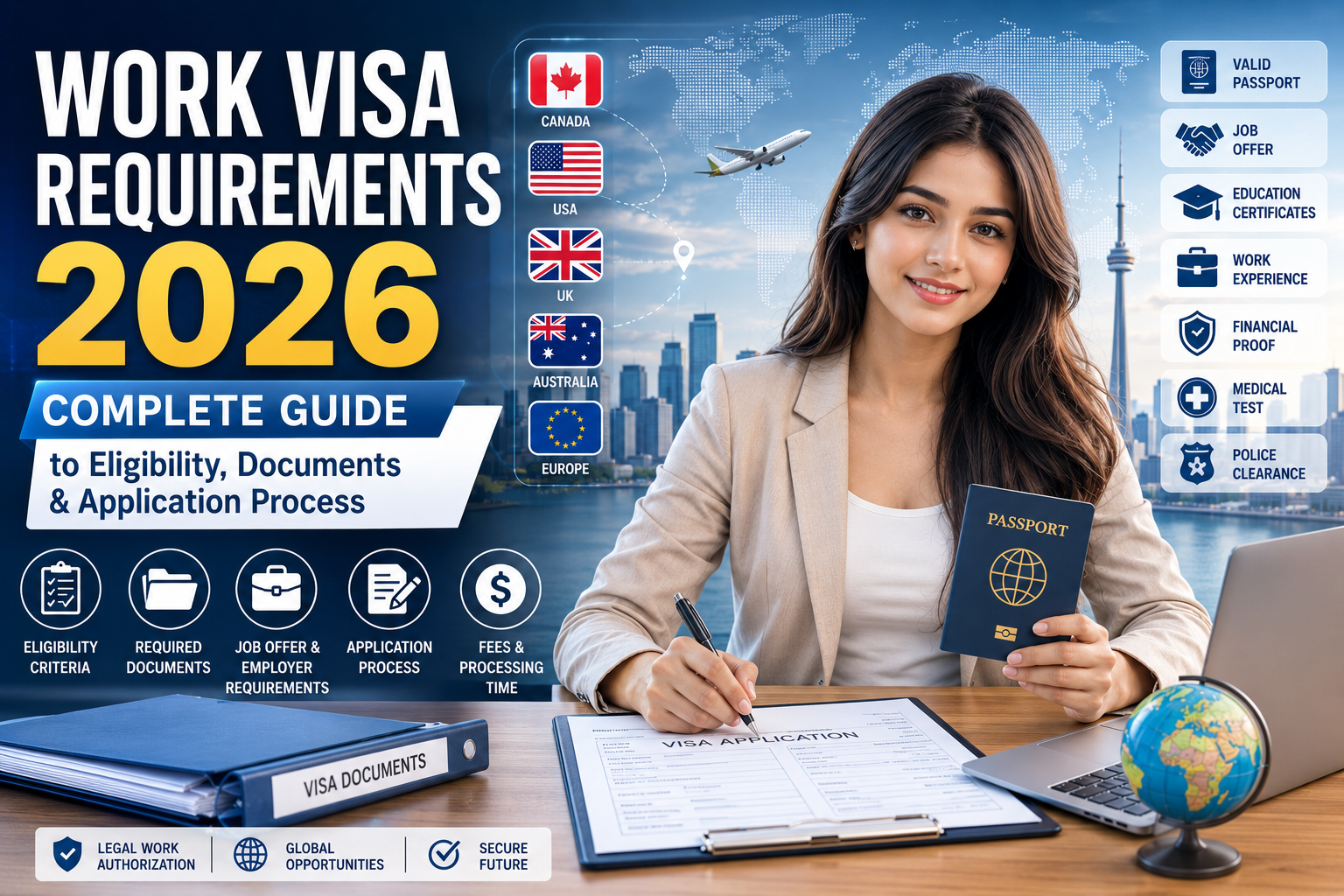
Visa Guide 2026: Complete Guide to Work Visas, Requirements, and Applications
Work visa requirements for 2026 are important to understand before applying for a work visa in another country. Finding the right visa can be confusing, especially when you want to work in another country. Every country has immigration rules, visa categories, documents, eligibility requirements, and application processes. A good visa guide can help you understand the steps before starting an application.
In this Visa Guide 2026, we explain the things you should know about work visas, job offers, documents, applications, visa fees, and common mistakes. Work Visa Requirements 2026. The exact requirements depend on the country and visa category, so applicants should always check the immigration website before applying.
What Is a Work Visa?
A work visa or work permit is permission that allows an eligible foreign national to work in a particular country under specific conditions.
The rules are different from one country to another. Work Visa Requirements 2026. Some countries require an approved job offer before a person can apply for a work permit, while some programs may allow eligible applicants to apply under certain conditions.
For example, Canada has employer-specific work permits and open work permits. An employer-specific permit generally requires a job offer, while an open work permit is available to people who meet specific eligibility requirements.
How to Choose the Right Visa
The first step is understanding why you want to travel and work abroad.
You should identify:
The country where you want to work
The type of job you want
Your education and work experience
Whether you already have a job offer
The type of work permit
Whether you meet the visa requirements
Which documents you need
Whether your employer must complete additional steps
Do not select a visa only because someone tells you that it is easy to obtain. Visa eligibility depends on your circumstances and the rules of the immigration program.
Employer-Sponsored Work Visas
Employer-sponsored visas are an option for people who want to work abroad.
In these programs, an employer may need to provide a job offer and complete certain requirements before or during the worker’s visa process.
For example, Canada’s official information explains that an employer-specific work permit requires a job offer. Some jobs may also involve employer requirements, such as an LMIA or an LMIA-exempt process, depending on the situation.
A genuine employer-sponsored opportunity should always be checked carefully. Applicants should verify the employer, job offer, salary, location, and official immigration requirements before paying money or submitting documents.
Open Work Permits
An open work permit is different from an employer-specific work permit.
An open work permit can allow an eligible person to work for an employer without being restricted to one employer. However, this does not mean that everyone can apply for a work permit.
Canada’s official immigration information states that open work permits are available in specific situations and have their own eligibility requirements.
Because eligibility can change depending on the applicant’s situation, it is important to check the rules before applying.
Common Documents for a Visa Application
The required documents depend on the country and visa category. However, many work visa applications can involve documents such as the following:
Valid passport
Job offer or employment documents
Educational certificates
Work experience documents
Resume or CV
Proof of funds when required
Police certificate, when required
Medical examination, when required
Photographs
Application forms
Biometrics, when required
Additional documents requested by immigration authorities
You should never submit fake or altered documents. Providing false information can seriously affect an immigration application.
How to Apply for a Work Visa
The application process usually starts by identifying the visa or work permit category.
Step 1: Check Eligibility
Read the requirements carefully. Make sure your education, experience, job offer, nationality, and other circumstances meet the conditions of the program.
Step 2: Find a Job Opportunity
If your visa category requires a job offer, look for legitimate employment opportunities.
Check the employer’s information. Make sure the job offer is genuine. Be especially careful with people who promise a guaranteed visa or guaranteed job in exchange for payments.
Step 3: Prepare Your Documents
Create a checklist before submitting your application. Make sure names, dates, employment information, and other details are consistent across your documents.
Step 4: Complete the Application
Use the immigration application system whenever possible. Follow the instructions for your visa category.
For example, Canada’s official work-permit process can require applicants to sign in to an account, upload documents, pay applicable fees, submit the application, and provide biometrics when required.
Step 5: Wait for Processing
After submitting an application, immigration authorities review the information and documents.
Processing times can vary. Applicants should check the government website for the latest processing information rather than relying on unofficial promises.
Step 6: Follow the Decision
If the application is approved, read the visa or work permit conditions. You should understand where you can work, which employer you can work for, and how long the authorization is valid.
Visa Application Fees
Visa and work-permit fees vary by country and visa type.
Do not assume that one fee applies to every applicant. Some categories may have charges for services such as biometrics or medical examinations.
For example, Canada’s official work-permit information currently lists a work-permit processing fee of CAD $155, with additional fees possible depending on the type of permit and applicant.
Always confirm the fee on the official government website before paying.
How to Avoid Visa Scams
Visa scams are a concern for people searching for jobs abroad.
Be careful if someone:
Promises a guaranteed visa
Promises a guaranteed job without a recruitment process
Requests unusual payments
Uses fake government documents
Asks for passwords or sensitive account information
Claims to have special connections with immigration officers
Pressures you to pay immediately
Refuses to provide verifiable employer information
A legitimate job or visa process should be based on official requirements and verifiable information.
Never send personal documents to unknown people without first confirming who they are and why they need them.
Why Official Immigration Websites Matter
Immigration rules can change. A visa requirement that was correct months ago may not remain the same.
For this reason, applicants should use official government websites as their source of current information.
For example, Canada’s official immigration website provides information about work permits, eligibility, application procedures, fees, and different types of work authorization.
Information on third-party websites can be useful for education, but it should not replace the official instructions for your specific application.
What Happens After Getting a Work Permit?
Getting a work permit does not necessarily mean that every condition has disappeared.
You should carefully check the conditions attached to your authorization.
For Canada, official guidance explains that a work permit can specify the type of work, employer, location, and validity period. After receiving authorization, workers may also need to complete steps such as obtaining a social insurance number.
Always follow the conditions written on your immigration documents.
Common Visa Application Mistakes
Many applicants make mistakes during the application process.
Choosing the visa category
Providing incomplete information
Uploading unclear documents
Using incorrect employment information
Ignoring application instructions
Missing deadlines
Using fake documents
Trusting unverified agents
Paying unofficial fees
Failing to check updated government requirements
Taking time to check everything before submitting an application can help reduce avoidable problems.
Visa Guide for International Job Seekers
If your main goal is to find a job, your visa research and job search should work together.
First, identify countries where your skills and experience may be relevant. Then research the work-permit options available for foreign workers.
Look for employers that clearly advertise recruitment or sponsorship opportunities where permitted. Read the job description carefully. Check whether the employer actually supports the required immigration process.
You can also compare countries based on:
Available jobs
Required qualifications
Work-permit rules
Employer requirements
Application process
Living costs
Language requirements
Long-term immigration options
However, these factors should be researched using current official information because immigration programs and requirements can change.
Final Thoughts
A proper visa guide for 2026 can make the immigration process easier to understand. Every applicant must check the requirements for their own situation.
Before applying, choose the visa category, verify your job offer, prepare accurate documents, understand the fees, and use official government information.
For people looking for employer-sponsored opportunities, researching the employer and immigration requirements is especially important. Never rely on promises of a guaranteed visa or guaranteed approval.
The safest approach is simple: verify the opportunity, read the requirements, prepare accurate documents, and follow the legal application process.
Asked Questions
Can I get a work visa without a job offer?
It depends on the country and visa category. Some work permits require a job offer, while certain programs may have eligibility rules.
How long does a work visa take?
Processing time depends on the country, visa category, application volume, and individual circumstances. Always check the immigration website for current processing information.
Can an employer sponsor a worker?
In some countries and programs, employers can support workers through specific immigration processes. The employer and worker must meet the requirements.
Can I apply without an agent?
In some situations, applicants can submit their own applications. Whether professional immigration advice is appropriate depends on the person’s circumstances.
What is the important visa rule?
Always use accurate information and follow the official requirements for the specific visa category. Do not use false documents or misleading information.